

Cover Image
| Date & Time | |
| Venue | Hotel GSR, Batawadi, Tumkur |
| State | Karnataka |
| Chapter | Tumkur |
| Members' Fees (₹) | 0 |
| Non-Members' Fees (₹) | 0 |
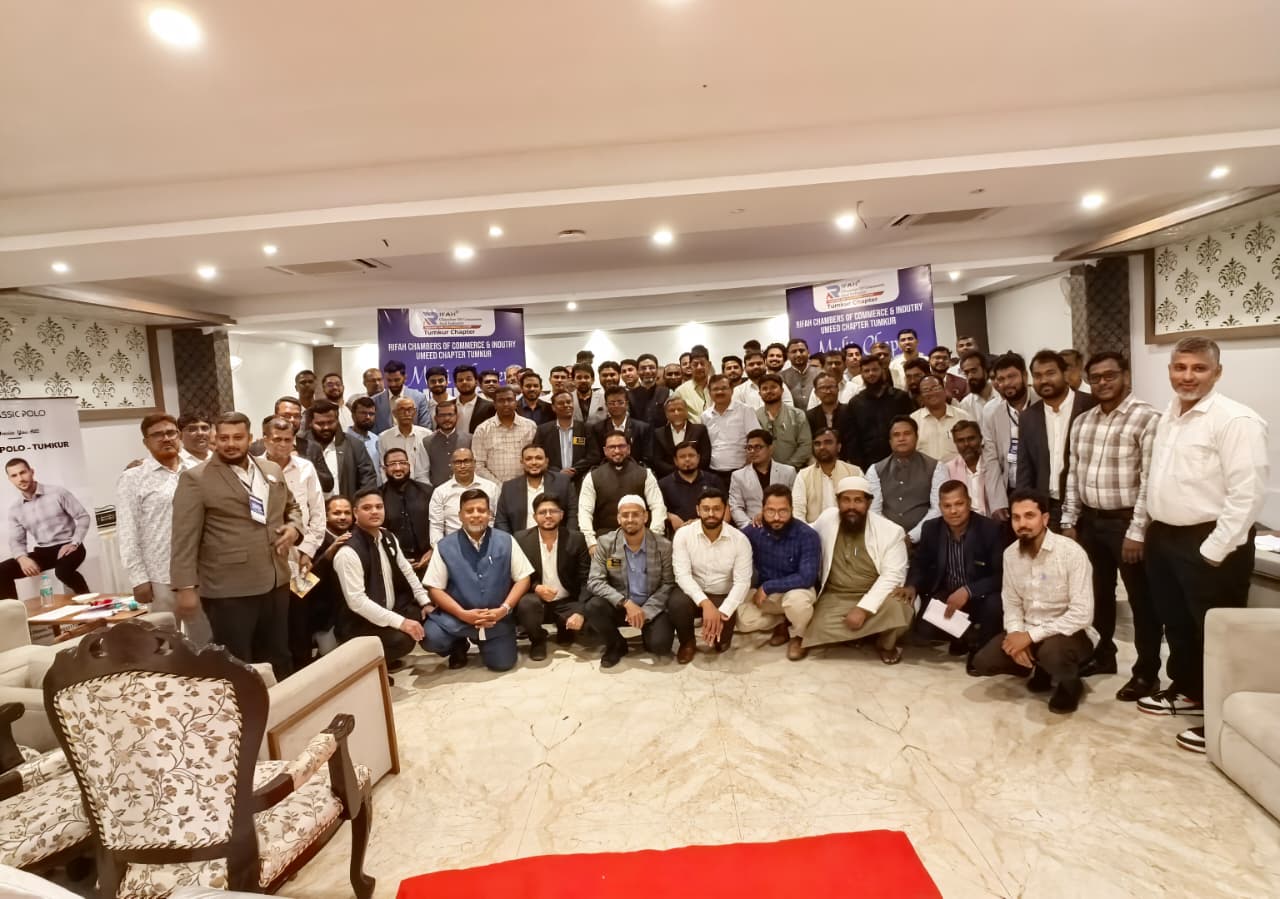
| Description | RIFAH Unveils ‘Tumkur 2030’ Vision; 200 Business Leaders Chart Roadmap for Economic Growth TUMKUR, October 31: Positioning Tumkur as an emerging destination for investment, industrial development and business expansion, the RIFAH Chamber of Commerce and Industry, Tumkur Chapter, successfully organised a Karnataka Multi-Chapter Business Networking Meet at Hotel GSR on Saturday under the theme Tumkur 2030 – Platform to Business Prosperity. The landmark gathering brought together around 200 entrepreneurs, industrialists, business leaders and RIFAH members from different parts of Karnataka, creating a vibrant platform for networking, investment discussions and business collaborations. The event also unveiled an ambitious roadmap to accelerate Tumkur’s economic growth, with a mega business summit planned for January 2027. The programme was organised under the leadership of RIFAH Tumkur Chapter President Yahya Khan, with the active coordination of General Secretary Mohammad Umar Saeed, Joint Secretary Dr. Mudassir Habib and Treasurer Mohammed Ghouse Peer, along with the dedicated efforts of the chapter team. A major highlight of the event was the presentation of the ‘Tumkur 2030’ vision by Yahya Khan, who outlined the district’s industrial strength, infrastructure potential and emerging business opportunities over the next five years. Highlighting Tumkur’s strategic location, industrial development prospects, connectivity and economic potential, he invited entrepreneurs and investors from across Karnataka to explore the district’s potential, establish business ventures and become partners in its growth journey. The presentation highlighted Tumkur’s geographical significance, its contribution to Karnataka’s economy, industrial areas linked to the Chennai–Bengaluru Industrial Corridor, 1,736 acres of industrial development under Phase A and a literacy rate of approximately 75 per cent. The proposed metro connectivity, around 300 acres earmarked in the industrial region for Japanese companies and emerging opportunities across multiple sectors were also highlighted as factors that could strengthen Tumkur’s investment appeal. Khan emphasised that the next five years would be crucial in positioning Tumkur as a major industrial and commercial hub. He called upon the business community to seize emerging opportunities through investment, innovation and strategic partnerships. Chief Guest Syed Mumtaz Mansoori, President of RIFAH Karnataka and CEO of Ragrill Components and Systems Private Limited, called upon entrepreneurs to move beyond individual business interests and embrace collective growth through cooperation, networking and mutual support. He stressed that business organisations must play a proactive role in promoting entrepreneurship, strengthening micro, small and medium enterprises (MSMEs), generating employment and contributing to the country’s economic progress. Highlighting the importance of economic empowerment, particularly among sections of the Muslim community facing socio-economic challenges, he underlined the need to promote education, entrepreneurship and financial independence. He said the ultimate objective of business development should extend beyond individual success to creating sustainable enterprises, generating employment opportunities and contributing meaningfully to India’s GDP. He also urged businesspersons to utilise the RIFAH platform effectively to build lasting professional relationships based on trust, ethical business practices and mutual growth. The programme was attended by several distinguished personalities, including Hamza Hussain, Superintendent of Police, Karnataka State Reserve Police (KSRP); industrialist Naveen Ahmed; and Jaffer Vali, Managing Director of Aero Treatments Private Limited. RIFAH Karnataka State Vice Presidents Abdul Jaffar Bayyaz and Tariq Mujahid, General Secretary Mohammed Arifullah, State Bizpol Secretary Tajuddin Sharif and State Event Secretary Habeeb ur Rahman were also present. The organisers particularly acknowledged the contributions of Tajuddin Sharif and Habibur Rahman in planning, coordination and execution of the programme. Representatives from various RIFAH chapters, government departments and other sectors also participated in the meeting. The gathering provided entrepreneurs, traders, MSMEs and industrialists with an opportunity to introduce their businesses, exchange ideas, identify potential partners and explore new commercial possibilities. The enthusiastic participation of business representatives from across Karnataka reflected the growing importance of collaborative business platforms in strengthening regional economies. The meet also reinforced RIFAH’s commitment to building a strong business ecosystem based on ethical business practices, professional networking and sustainable development. Announcing the next phase of the initiative, the organisers revealed plans to conduct a grand Tumkur 2030 Business Summit and Mega Event in January 2027 under the theme ‘From Business Networking to Economic Transformation’. While the October 31 meet marked the first phase of the initiative, the forthcoming summit is expected to bring together a wider network of investors, industrialists, entrepreneurs and other stakeholders to explore investment opportunities, promote industrial expansion and forge strategic business partnerships. The initiative aims to transform Tumkur into a prominent business and investment destination by connecting emerging opportunities with potential investors and entrepreneurs from across Karnataka. The programme concluded with the organisers expressing gratitude to the chief guest, dignitaries, RIFAH state leadership, participating chapter representatives, business community, sponsors, volunteers and supporters. The successful meet marked a significant step towards the vision of ‘Tumkur 2030’, sending out a strong message that collective entrepreneurship, strategic investment and business collaboration can become powerful drivers of the district’s economic transformation. |
| Event Gallery |
Cover Image
|
Flat No. 4 C & D, 1st Floor, Plot No. 96, 77C, Hamid Building, Hafiz Ali Bahadur Khan Marg, Mominpura, Jacob Circle, Byculla West, Mumbai – 400011